

“Your content is only as valuable as what it earns.”
It sounds harsh, but it’s true. You can spend hours writing blogs, making videos, or designing tutorials, yet if you don’t know how to monetize them, all that effort just sits there.
Meanwhile, creators who understand content monetization are quietly turning the same kind of content into steady income.
You might have guides, templates, courses, or videos that people need, but if your approach to making money feels forced or complicated, it won’t work.
People scroll past “too polished” content all the time. They want value, trust, and a reason to pay attention.
In this guide, you’ll learn what content monetization really is, who should monetize their content, practical ways to earn from your work, and examples you can replicate.
By the end, you’ll know how to make your content work for you, not just sit pretty online.
Because today, attention is easy to get, but monetization is what actually counts.
What is Content Monetization
Content monetization is the process of turning your content into income. It simply means creating something valuable, like a blog post, video, template, or guide, and putting a system in place that allows you to earn from it.
That could be through direct payments, brand partnerships, ads, or selling your own digital products.
In simple terms, if your content is helping people solve a problem, learn a skill, or make a decision, then it has value. Content monetization is now how you capture that value instead of just giving it away for free all the time.
For instance, if you’re a digital marketer who shares tips on LinkedIn. People engage with your posts, save them, and even send you DMs asking for help. That shows that your content is useful.
Now, monetization is what happens when you take that same knowledge and turn it into something structured that people can pay for. It could be a paid guide, a short course, or even a consultation session.
So when people ask, what is content monetization, the best way to understand it is this:
It’s not just about creating content; it’s about making your content work for you.
Who Should Monetize Their Content
Content monetization is not just for influencers with massive followings.
It applies to anyone who creates content that helps, teaches, or guides others in a specific area.
If your content solves a problem or provides clarity, then you already meet a basic part of what is the criteria for content monetization.
Now, let’s simplify it further:
1. Digital skills professionals
Digital skills professionals are at the top of this list.
If you’re a writer, designer, developer, SEO specialist, or marketer, chances are you’ve already shared knowledge, tips, tutorials, threads, or case studies.
If people learn from you, save your content, or ask you questions, then that means your content has value. And valuable content can be monetized.
2. Freelancers and service providers
If you offer services like copywriting, branding, or web development, your content is already doing part of the selling for you.
So instead of relying only on client work, you can turn your expertise into digital products, paid resources, or even structured learning content.
That way, your income is not tied only to time.
If you don’t know how to get started as a freelancer, we have a complete guide on freelancing and how you can start.
3. People documenting their learning journey are
This category is often overlooked, but if this is your category, then you’re also in a strong position to monetize.
You don’t even have to be an expert.
If you’re learning a skill and sharing your process, what works, what doesn’t, tools you’re using, there are others just a few steps behind you who find that content useful. That usefulness is where content monetization starts.
4. Creators with small but engaged audiences
If this is you, then you shouldn’t feel left out.
One of the biggest myths is that you need thousands of followers. In reality, a small audience that trusts you is more powerful than a large audience that ignores you.
So if people consistently engage with your content, you already have what many content monetization platforms value, and that’s attention and trust.
Ultimately, the real answer to what the criteria for content monetization is simple:
Are you creating content that people find useful enough to pay for, directly or indirectly?
If the answer is yes, then you’re already in a position to start. You don’t need to wait until you feel “ready.”
You just need to start thinking beyond posting… and start thinking about value.
Practical Ways to Monetize Your Content
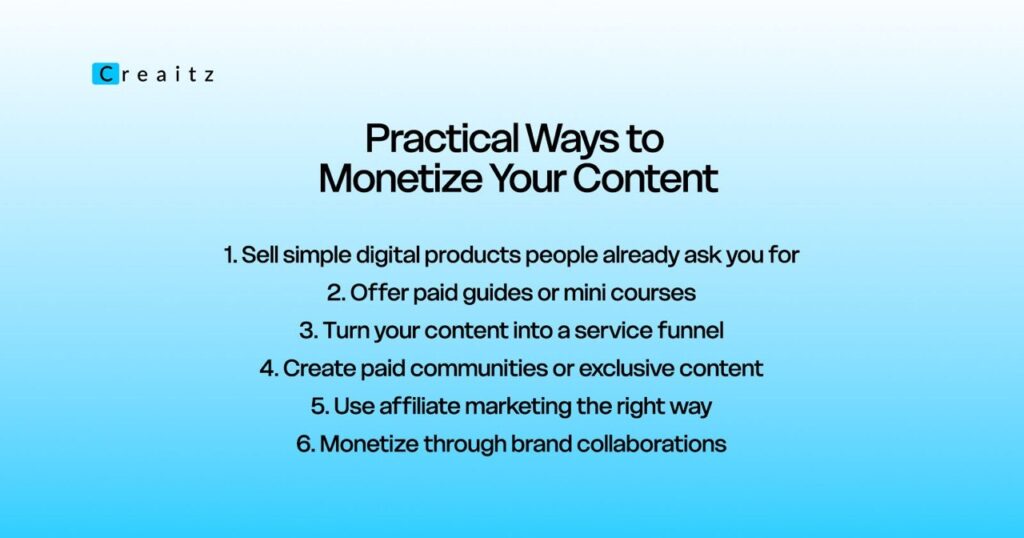
Content monetization works best when it is tied to real value.
It is not about forcing people to pay, but about packaging what you already know or share in a way that people are willing to invest in.
So if your content is already helping people, then monetization is simply the next step; you just have to make that help you’re giving them structured, accessible, and worth paying for.
This is how you can do just that:
1. Sell simple digital products that people already ask you for
If people constantly ask you “How did you do this?” or “Can you share this?”, then that’s your starting point.
So instead of replying to the same thing over and over, turn it into something you can sell.
For example, if you’re a writer, that could be a collection of proven templates. If you’re a designer, it could be UI kits or Canva templates.
If you’re in SEO, it could be a keyword research checklist or content framework.
You’re not creating from scratch; you’re only packaging what you already know. That’s one of the easiest entry points into content monetization.
2. Offer paid guides or mini courses
The truth is that everyone doesn’t need a full course. In fact, many people just want something short and straight to the point.
So let’s say you’ve been sharing tips on “how to land clients as a beginner.” Instead of spreading that knowledge across 20 posts, you can just bring everything together into a simple paid guide or a short course.
People don’t pay for information alone; they pay for clarity and structure.
3. Turn your content into a service funnel
Sometimes, the content itself is not what you sell; it’s what brings people to what you sell.
Let’s say you’re a web developer sharing before-and-after website transformations; naturally, you’re attracting business owners who want the same results.
Your content builds trust, and your service becomes the monetization point.
This is one of the most practical forms of content monetization because you’re not changing what you do; you’re just being intentional about it.
4. Create paid communities or exclusive content
If you consistently share valuable insights, there will always be people who want deeper access. That’s where exclusive content comes in.
It could be a private WhatsApp group, Telegram channel, or a membership platform where you share more detailed breakdowns, answer questions, or give direct feedback.
It’s not exactly like you’re locking everything behind a paywall; you’re only offering extra value for those who want more.
5. Use affiliate marketing the right way
If you recommend tools, platforms, or resources you genuinely use, you can earn from those recommendations too.
For instance, if you always talk about a design tool or writing software, you can sign up for their affiliate program and earn when people sign up through your link.
The key here is trust. People can tell when something is forced. But when it’s natural, affiliate marketing can become a smooth part of your content monetization strategy.
6. Monetize through brand collaborations
Once your content starts attracting attention, brands may want to work with you. But this doesn’t mean you need to be an influencer.
Even with a niche audience, brands care about relevance. If your content speaks directly to a specific group, you become valuable to companies targeting that same audience.
This could be sponsored posts, product mentions, or content partnerships.
All of these methods come back to one important thing, and that’s value.
If your content is useful, relatable, and solves real problems, then monetization becomes a natural next step, not something forced.
You’re simply giving people a way to go deeper, get results faster, or access something more structured.
Content Monetization Platforms
Content monetization platforms are tools or systems that help you earn directly or indirectly from your content.
They provide the structure, whether it’s for selling products, hosting courses, running memberships, or earning through audience engagement.
The platform you will choose absolutely depends on what you create, how you create it, and how your audience prefers to consume it.
Now let’s look at a few that could be used by digital professionals.
1. Platforms for selling digital products
If you create things like ebooks, templates, checklists, or guides, then platforms like Selar, Gumroad, or Payhip are a strong starting point.
They are simple to use and don’t require complex setups. You upload your product, set a price, and share the link. That’s it.
This works really well if you already have content people engage with.
So instead of just posting tips, you can direct people to a paid resource that goes deeper.
2. Platforms for courses and structured learning
If your content is more detailed or educational, you might want to turn it into a course.
Platforms like Teachable and Thinkific allow you to organize your knowledge into lessons people can follow step by step.
This is especially useful for skills like design, writing, marketing, or tech. People are willing to pay when the learning is clear and well-structured.
So instead of scattered content across your social pages, you can just create one complete learning experience. And that becomes your monetization channel.
3. Platforms for memberships and exclusive content
Sometimes, your value is in consistency, not just one product.
That’s where membership platforms like Patreon or even private communities come in.
You can offer exclusive content, deeper insights, or direct access to you.
People who find your free content useful will pay to get more of it.
You can also take advantage of features like Selar’s “Show Love,” where your audience can support you financially without needing a full product or subscription.
It’s a simple way for people who genuinely value your content to contribute, even if they’re not ready to commit to something bigger.
4. Platforms for audience-based monetization
Social platforms themselves are also becoming strong monetization channels.
YouTube, TikTok, X, and even Meta now offer ways to earn through ads, creator funds, or subscriptions.
However, you should know that these platforms require consistency and audience growth before they pay off.
So while they are useful, they work best when combined with other monetization methods like selling products or services.
5. Platforms for freelance and service monetization
If your content attracts clients, platforms like Upwork or Fiverr can help you turn that attention into paid work.
Since your content builds trust, these platforms give people a place to hire you easily.
It’s a simple but effective form of content monetization, especially if you’re offering services.
Lastly, you don’t need to be everywhere to monetize your content.
You just need to be intentional about where your content leads people, and how that journey turns into income.
Content Monetization FAQ
1. Do I need a large audience to start content monetization?
No. You can start with a small audience as long as they find your content useful and trust what you share.
2. What is the criteria for content monetization?
Your content should provide value, solve a problem, or teach something people care about. If people engage with it or ask for more, you’re ready to monetize.
3. How do I know what to sell?
Pay attention to what people ask you about often. Questions, DMs, and comments usually point to what people are willing to pay for.
4. Can I monetize free content?
Yes. Free content builds trust and attracts the right audience, while paid content offers deeper value or structured solutions.
5. How long does it take to start earning?
It depends on your consistency and strategy. Some people earn quickly, but for most, it takes time to build trust and refine their approach.
6. What is the biggest mistake in content monetization?
Trying to sell too early without building trust or creating content that doesn’t solve a clear problem.
7. Can I use multiple content monetization platforms?
Yes, but it’s better to start with one, understand it well, then expand as you grow.
In Conclusion
You have two options here:
You can keep creating content and hoping something clicks…
Or you can be intentional and start turning that effort into something that actually pays you.
However, if you’ve made it this far, then it probably means you’re not just creating for fun; you want your skills to work for you. And that’s a choice to make.
But here’s the truth: doing it alone can slow you down. You need the right environment, the right people, and the right guidance to grow faster and get it right.
That’s exactly what you’ll find in the Creaitz community.
Join us at Creaitz. Grow, learn, and start making your content work for you.
