

Not all best newsletter platforms are actually “best” for you, and that’s where most people get stuck.
Because the real question isn’t what are the best newsletter platforms, it’s what are you trying to do with it, grow an audience, sell something, write consistently, or just start small and learn?
The best newsletter platforms for writers might not always be the same as the best newsletter platforms for business, and even the best newsletter platforms’ free options can perform differently depending on your goal.
So today, we will break down the best newsletter platform, so you can pick what actually fits your purpose, not just what’s popular.
How Do You Know Which One Is Best for You?
You don’t pick from the best newsletter platforms by name; you pick by need.
The moment a tool doesn’t match your goal, it starts feeling heavy, even if everyone else is praising it.
1. Your goal (what are you actually trying to achieve)
If your goal is just to write and build consistency, then the best free newsletter platforms make sense because you can focus on sending, not spending.
But if your goal is income or business growth, then the best newsletter platforms for business are better because they come with automation, monetization, and scaling tools.
2. Your content type (what you’re publishing)
Writers who focus on storytelling, essays, or thought pieces usually perform better with the best newsletter platforms for writers, tools that keep writing and publishing simple.
But if your content includes offers, products, or client work, you’ll need platforms that support structure, lists, and audience segmentation.
3. Your audience size (where you are right now)
If you’re just starting, you don’t need complexity.
You can start with newsletter platforms that allow for experimentation without pressure.
But once your audience grows, limitations start to show, and that’s when switching to stronger tools makes sense.
4. Your consistency level (be honest here)
If you struggle to stay consistent, the “best” platform is the one that removes friction, has a simple editor, fast sending, no setup headaches.
A big mistake people make is choosing advanced tools they don’t even use properly.
5. Your monetization plan (if you have one yet)
If you already plan to earn from your newsletter, courses, services, and sponsorships, then you should be looking at the best newsletter platforms for business from day one.
If not, start simple, grow first, then upgrade when money or demand shows up.
Best Newsletter Platforms for Creators and Writers in 2026
Substack
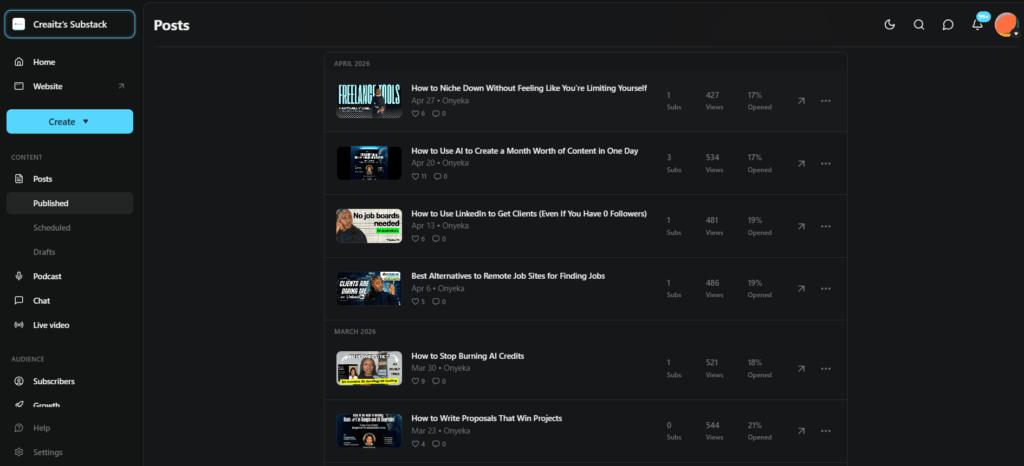
Substack is one of the most popular newsletter platforms for writers who want to publish and grow without dealing with technical setup.
It removes the “website stress” and lets you focus on writing and building an audience quickly.
Who it’s best for
- Writers who want to build a personal audience around ideas, stories, or opinions
- Beginners who want to start without learning tech or design
- Creators who may want to monetize through subscriptions later
Cost
- Free to start
- No upfront payment for publishing
- Takes a percentage (around 10%) only when you start earning from paid subscribers
Unique features
- Built-in audience discovery (people can find and subscribe to you inside Substack)
- Simple email + blog in one place (your posts work like both articles and emails)
- Easy paid subscription setup without needing external tools
- Very minimal setup — you can literally start writing immediately
When it works best / limitations
Substack works best when your focus is writing and audience-building, not customization.
But it becomes limiting if you want advanced design control, deep automation, or complex marketing funnels.
It’s simple on purpose, which is either its strength or limitation depending on your goal.
Beehiiv
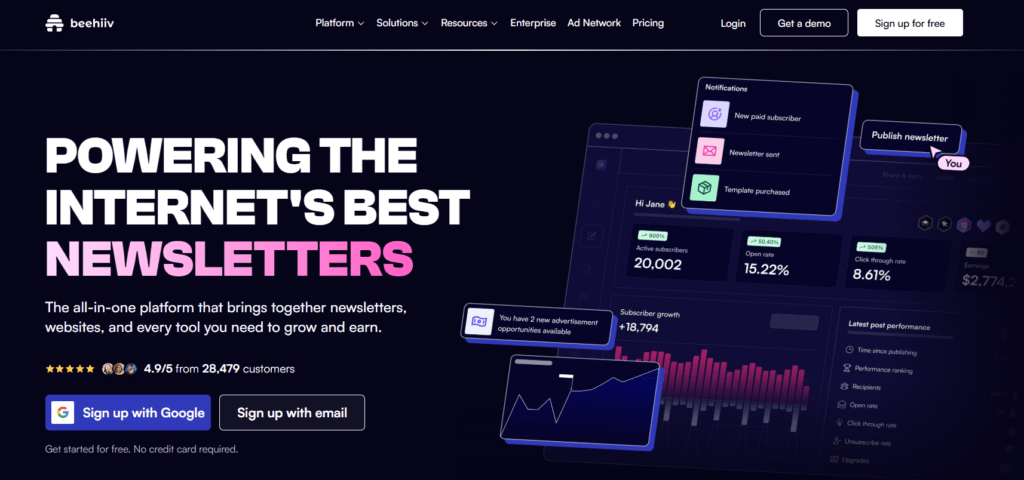
Beehiiv is one of the best newsletter platforms for writers and creators who are thinking beyond just sending emails, especially if growth and monetization are part of the plan.
Who it’s best for
- Writers and creators focused on audience growth
- People building newsletters like media brands
- Users who want more control over growth and monetization than Substack
Cost
- Free plan available (good for starting out)
- Paid plans for growth tools, analytics, and monetization features
- Pricing scales based on features and audience size
Unique features
- Built-in referral system (helps readers bring in more readers — strong growth tool)
- Advanced analytics (you can actually see what content performs best)
- Ad network opportunities for monetization
- More customization compared to Substack
When it works best / limitations
Beehiiv works best when you’re serious about scaling a newsletter into a brand or business.
But it can feel like “too much” if you’re only looking for something extremely simple to write and publish quickly without thinking about growth systems.
ConvertKit
ConvertKit is one of the best newsletter platforms for creators who want more structure around their audience, not just a place to send emails.
It works well when you’re ready to move from “just writing” to actually building something organised around your readers.
Who it’s best for
- Creators, coaches, and digital professionals growing an audience with purpose
- Writers who want to turn readers into subscribers or customers over time
- People who need more control over how different audience groups are managed
Cost
- Free plan available for beginners
- Paid plans unlock automation, tagging, and more advanced tools
- Pricing increases as your list grows and you need more features
Unique features
- Automation that reacts to user behaviour (not just scheduled emails)
- Tagging system for separating different types of subscribers
- Simple landing pages and signup forms included
- Built with creators in mind, not heavy enterprise setups
When it works best / limitations
ConvertKit fits well when you’re building an audience you plan to guide, not just broadcast to.
However, if your focus is only on quick publishing without setup or structure, it may feel like more than you currently need.
Mailchimp
Mailchimp is one of the oldest and best newsletter platforms, and it’s still widely used because it gives you a mix of email marketing, design tools, and basic automation in one place.
Who it’s best for
- Small businesses and brands are sending marketing emails
- Beginners who want ready-made templates and visual design tools
- Users who need both newsletters and promotional emails in one system
Cost
- Free plan available with limited contacts and features
- Paid plans unlock automation, segmentation, and advanced reporting
- Pricing increases with list size and feature usage
Unique features
- Drag-and-drop email builder (very visual and easy to use)
- Large template library for different industries
- Basic CRM-style contact management
- Strong integration with other business tools and websites
When it works best / limitations
Mailchimp works best for structured email marketing where design and campaigns matter.
But it can feel restrictive or expensive as your list grows, especially if you only need simple writing-focused newsletters without heavy marketing features.
Ghost
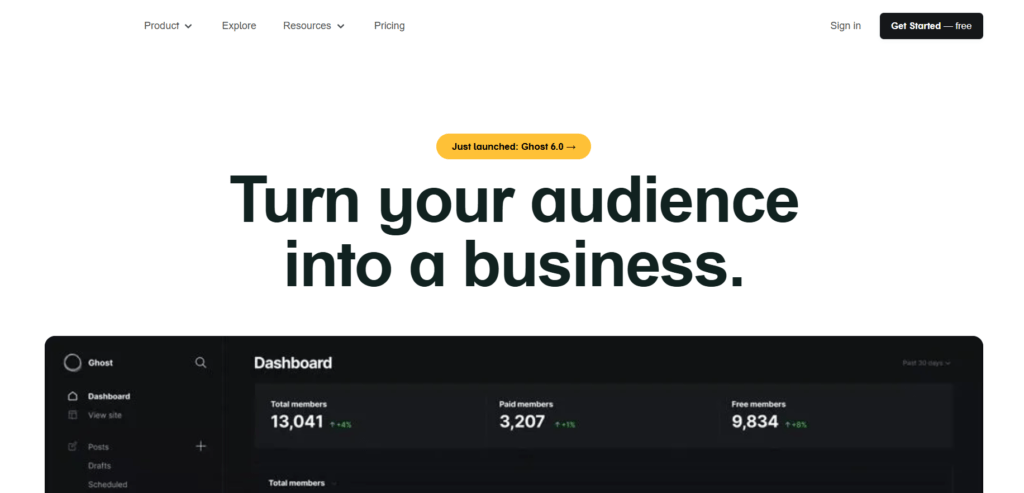
Ghost is one of the best newsletter platforms for writers and publishers who want full control over their content and audience without distractions.
It feels less like a tool and more like your own independent publishing system.
Who it’s best for
- Writers building a serious publication or media-style newsletter
- Creators who want ownership of both the website and the email audience
- People planning to monetize through memberships or subscriptions
Cost
- No free plan (you need hosting or Ghost(Pro))
- Paid hosting starts monthly, depending on audience size and features
- Higher cost compared to beginner tools, but more ownership in return
Unique features
- Combines a full website + newsletter in one system
- Built-in membership and subscription monetization
- Clean, distraction-free writing and publishing experience
- Strong SEO control for content visibility on search engines
When it works best / limitations
Ghost works best when you’re treating your newsletter like a long-term publishing brand.
Brevo (Sendinblue)
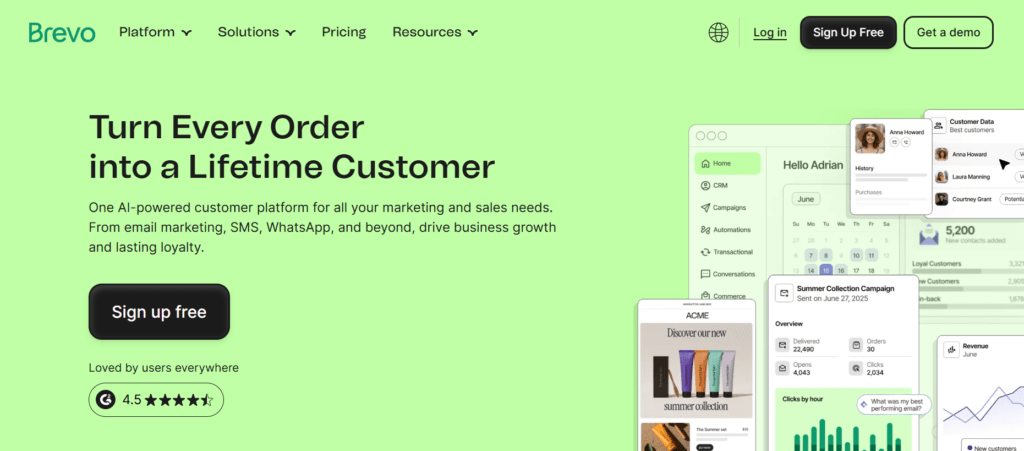
Brevo is one of the best newsletter platforms for small business users who want email marketing, automation, and messaging tools in one place without high costs.
Who it’s best for
- Small businesses sending newsletters, promos, and updates
- Freelancers and marketers who manage client email campaigns
- Users who want email + SMS + automation in one system
Cost
- Free plan available with daily sending limits
- Paid plans are affordable compared to many competitors
- Pricing is often based on emails sent, not just contacts
Unique features
- Email + SMS marketing in one dashboard
- Strong automation workflows even on lower plans
- Transactional emails (useful for business notifications)
- Simple CRM tools for managing contacts
When it works best / limitations
Brevo works best when your newsletter is part of a bigger business communication system.
However, it may feel less “creator-focused” if your main goal is storytelling or building a personal writing audience rather than marketing campaigns.
MailerLite
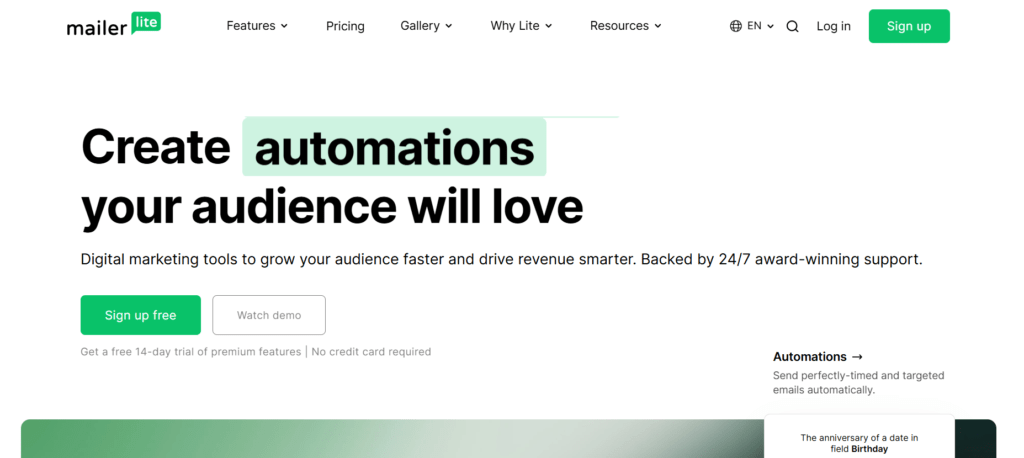
MailerLite is one of the best newsletter platforms for beginners, creators, and small businesses who want something simple but still powerful enough to grow with them.
It focuses on keeping email marketing clean, fast, and easy to understand.
Who it’s best for
- Beginners who want to start a newsletter without confusion
- Creators and writers building a small but consistent audience
- Small businesses sending updates, offers, or announcements
Cost
- Free plan available with generous features for starters
- Paid plans unlock automation, advanced segmentation, and more design control
- Pricing is generally affordable compared to most competitors
Unique features
- Very clean and simple interface (easy learning curve)
- Drag-and-drop email builder for quick design
- Landing pages and pop-ups are included even on lower plans
- Strong deliverability (emails are more likely to reach inboxes)
When it works best / limitations
MailerLite works best when you want something that just works without stress or technical learning.
However, it may feel limited if you need deep monetization systems, advanced community features, or complex publishing setups like full media platforms.
So What Newsletter Platform Should You Actually Pick?
Pick the one that lets you stop thinking and start sending, the one that fits your goal and plan. That’s it.
The real best newsletter platforms are not the loudest ones online; they’re the ones that move you from “I’m still comparing options” to “I just sent my first email.”
Everything else gets clearer after you start.
If this helped, don’t just scroll away, join us at the Creaitz and also make Creaitz your preferred source on Google for practical digital skills that actually move you forward.
