
Your next useful video could do more than attract subscribers.
It could appear in Google results, help someone evaluate a tool or become a cited source in an AI-generated answer.
That changes how digital talents, freelancers and creators should think about YouTube. It is not only a place for awareness campaigns. It can also help people make decisions.
Turn what you know into videos that answer real questions and measure whether those videos help people discover your work.
Why YouTube Deserves a Place in Your Search Strategy
Foundation Marketing analysed 8,566 B2B SaaS keywords and compared the overall search-intent mix with the subset where YouTube ranked in Google’s top ten.
Transactional queries represented 24.6% of that YouTube-ranking subset, compared with 11.5% of the full keyword set. Navigational queries represented 18.7%, compared with 7.1% overall.
The takeaway is that video appeared prominently around searches associated with taking action or finding a particular brand or product.
The study focuses on B2B SaaS, so its findings should not be treated as universal benchmarks. Still, it challenges the assumption that YouTube only serves people at the beginning of their buying journey.
A demonstration or comparison can help someone move from “I’m interested” to “I understand which option suits me.”
What is YouTube AI visibility?
YouTube AI visibility is the presence of your videos, channel or brand in AI-generated answers.
An AI system might reference a tutorial, cite a review or mention a creator when responding to a question.
However, these outcomes are different:
- A citation: Your video appears as a source.
- A brand mention: Your name appears in the answer.
- A referral: Someone follows a link to your content.
- A conversion: Someone takes a useful action afterwards.
A citation does not guarantee a brand recommendation, a click or a sale. Your reporting should distinguish them.
There is also no published universal “AI citation threshold” that every video must meet. Useful content and clear presentation are sensible foundations—not guarantees.
Start with Decisions, not Random Video Ideas
Instead of asking, “What should I upload this week?”, ask: “What does my audience need to understand before choosing, buying or doing something?”
Research the demand before committing to production. Then choose an angle you can demonstrate credibly.
Give Viewers Something They Can Inspect
A generic script that repeats a product’s homepage offers limited value.
A stronger video shows:
- The task you attempted
- The steps involved
- Relevant screenshots or demonstrations
- What worked
- What did not
- Who the approach suits
- Important limitations
Context can make a recommendation more useful.
If you have not personally tested a tool, say so. Clearly distinguish a researched overview from a hands-on review.
Your credibility comes from what you can support, not how confidently you present it.
Make the Video Easy to Understand
Clear packaging helps viewers recognise whether the video answers their question.
Use a specific title
“Tools You Need” says little.
“How to Compare Portfolio Platforms as a Beginner Designer” communicates a clearer purpose.
Avoid promising results the video cannot substantiate.
Write a useful description
Explain what the viewer will learn. Include relevant sources, supporting resources and a sensible next step.
Use the main topic naturally rather than repeating keywords.
Add accurate captions and chapters
Review automatic captions, especially product names, technical language and local terminology.
For longer videos, chapters can make the demonstration easier to navigate. They are a usability improvement, not a guaranteed route to AI citations.
Connect the video to supporting content
Embed the video in a relevant blog post and link back to the article from the description.
A written guide can provide references and downloadable resources, while the video demonstrates the process. Each format should contribute something useful rather than duplicate the other.
Choose a Video Topic—and Check Whether It Gets Discovered
Suppose you want to create a video helping beginner designers choose a portfolio platform. Before recording, investigate what people search for and what existing videos leave unanswered.
1. Research the question before filming
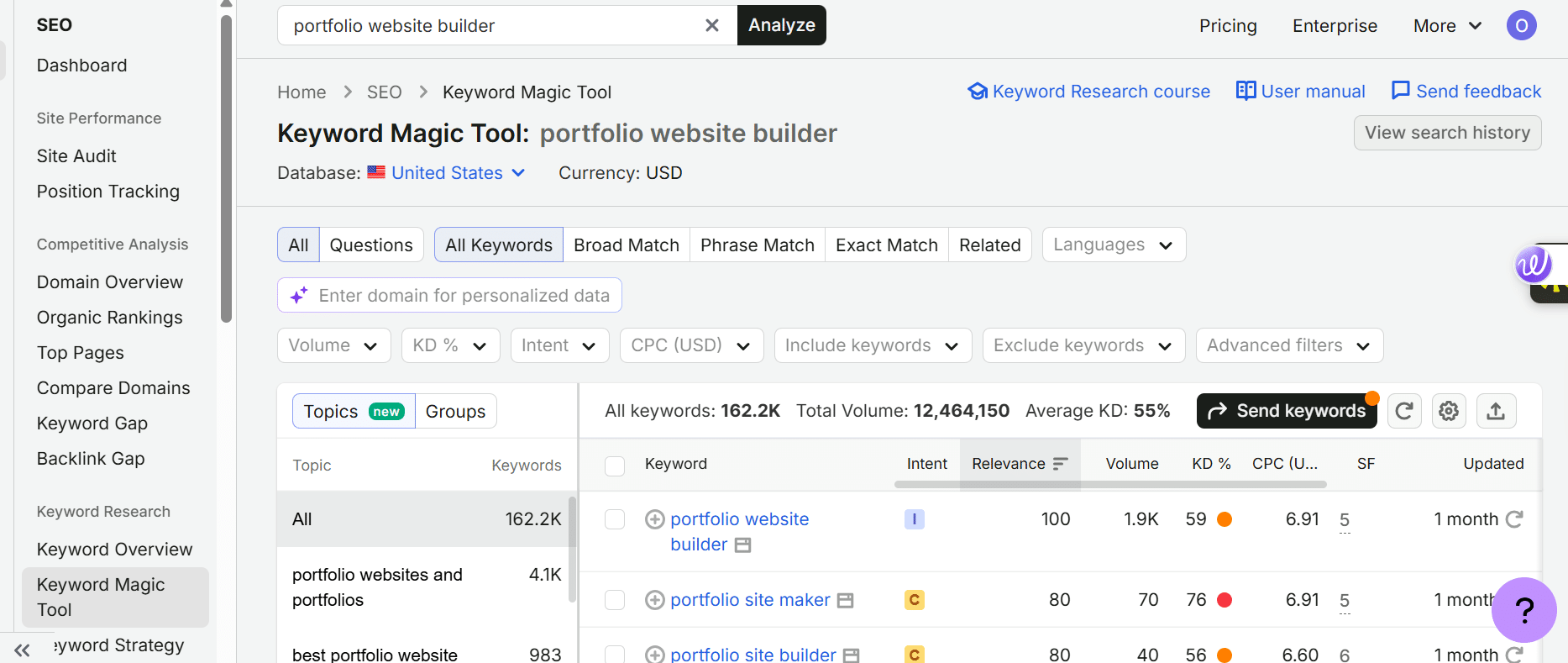
Enter a relevant phrase, such as “portfolio website builder,” into Semrush’s Keyword Magic Tool. Review related queries, their intent and available search data.
Then inspect the results for a promising query. Do videos appear? Are they comparisons, tutorials or demonstrations? What could your video explain more clearly?
2. Check which sources appear in AI answers
Use Semrush’s AI Visibility reports to investigate relevant topics and prompts.
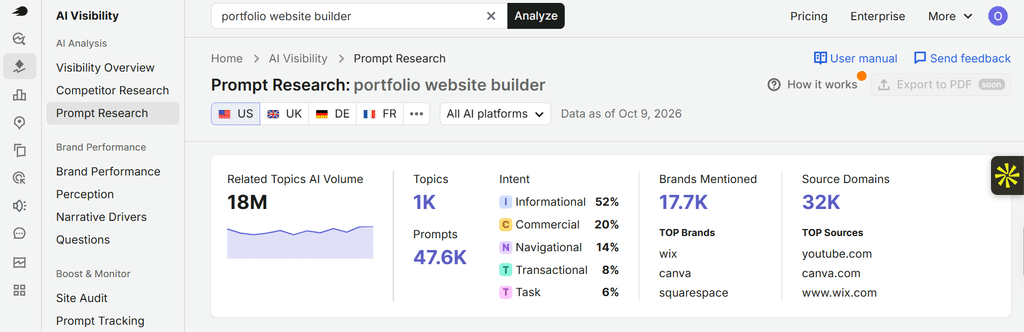
Inspect the cited sources, looking specifically for YouTube URLs.
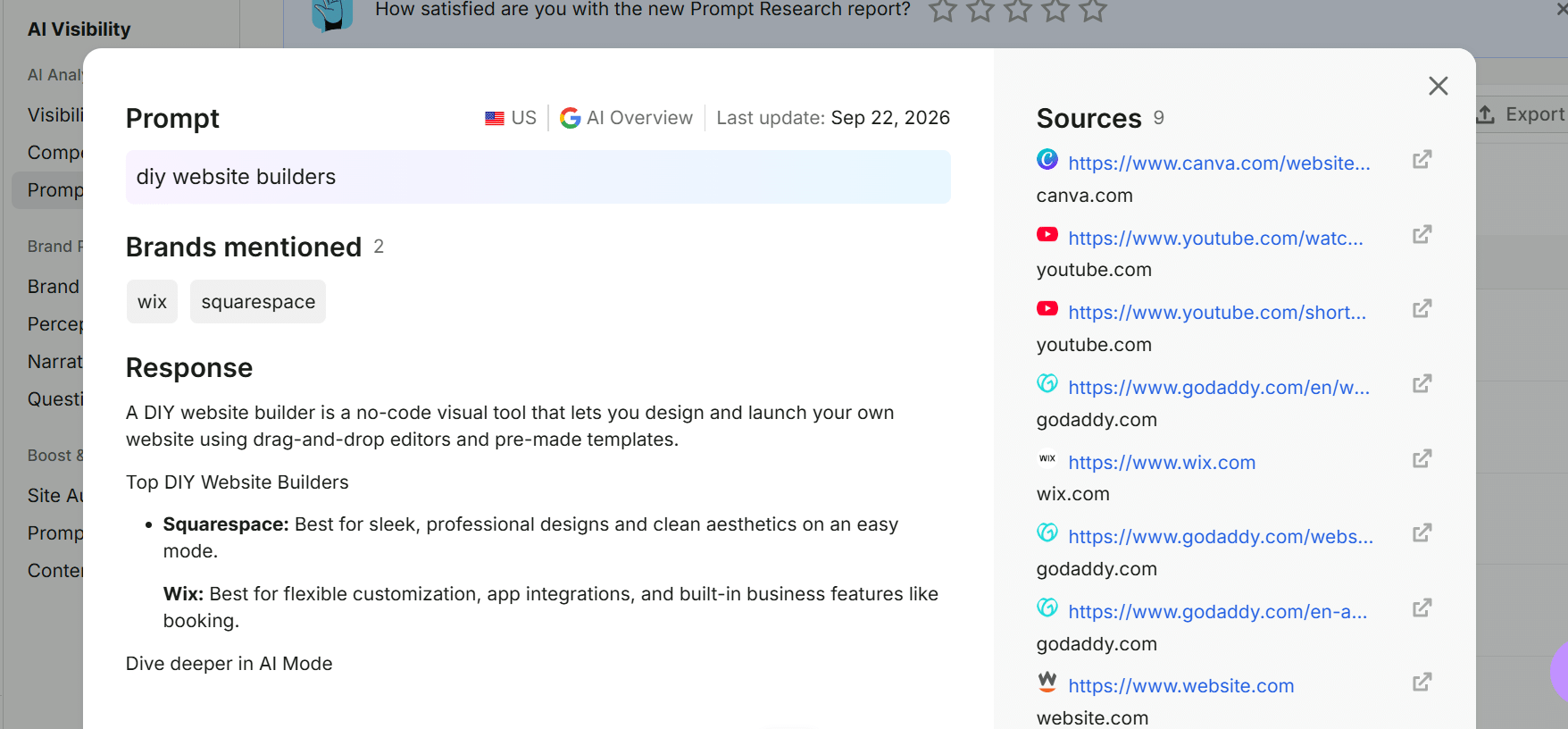
If a video appears, watch it. Does it demonstrate the product, compare alternatives or answer a specific question? Use that observation to improve your brief—not to copy the creator’s work.
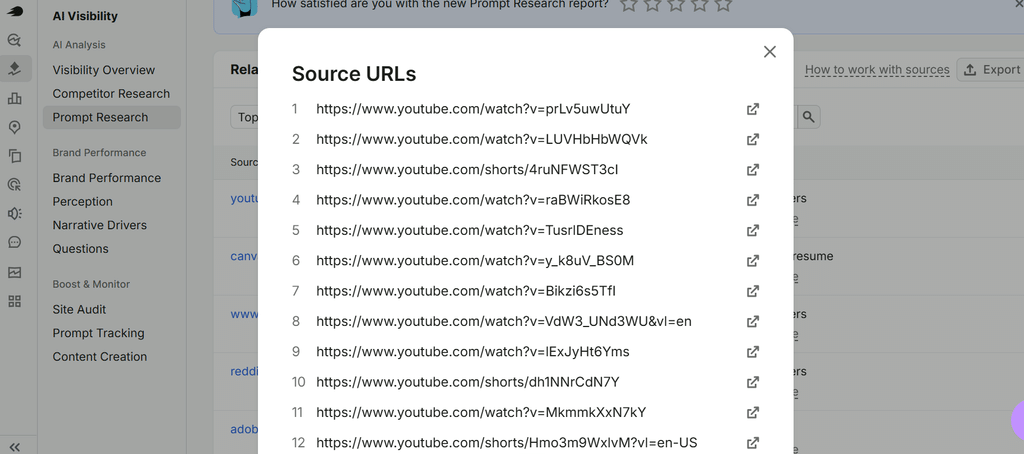
A cited YouTube URL shows that a video appeared in the monitored answer. A brand mention alone does not prove that a video earned the visibility.
3. Publish, then measure the response
After publishing, review relevant AI answers over time alongside YouTube Analytics. Track watch time, visits through your description links and useful actions such as enquiries or newsletter subscriptions.
Keep the reporting scope consistent. Citation counts, video views and conversions measure different outcomes; none guarantees the others.
You can explore this workflow with Semrush One’s 7-day free trial, which brings SEO research and AI visibility monitoring together.
Start small—but make the video useful
You do not need a studio or a daily upload schedule.
Begin with one question you can answer well, using a screen recording, clear audio and a concise explanation.
Short videos can address focused questions. Longer videos may be more suitable for detailed comparisons and demonstrations. Choose the format you want according to the task.
If you keep treating YouTube as a searchable library of useful work, soon enough it will produce results that can impact your income.
Disclosure: This article contains affiliate links. If you purchase through them, Creaitz may earn a commission at no additional cost to you.
