
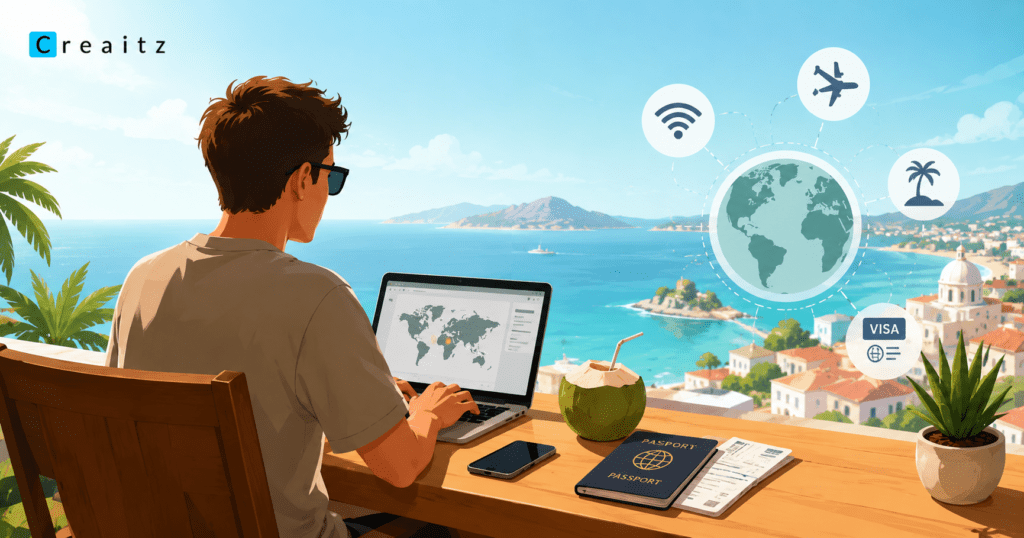
Imagine closing your laptop in Lagos today and opening it next month in Spain, Portugal, or Italy without breaking any immigration rules.
That’s the appeal of a digital nomad visa.
If you work remotely, freelance, or run an online business, a digital nomad visa lets you legally live in another country while earning income from abroad.
In this guide, you’ll learn how it works, which countries offer it, and whether it’s the right move for you.
Table of Contents
ToggleWhat Is a Digital Nomad Visa?
A digital nomad visa is a special visa that allows remote workers, freelancers, and online business owners to legally live in a foreign country while earning income from clients, employers, or businesses outside that country.
If you’ve ever wondered, “What is a digital nomad visa, and how is it different from a tourist visa?” the answer is simple: a tourist visa allows you to visit a country, while a digital nomad visa allows you to stay for an extended period and work remotely without violating immigration rules.
Think of it this way. A graphic designer in Nigeria can move to Spain for several months, continue working with clients around the world, and remain fully compliant with local visa requirements.
The same applies to writers, developers, marketers, virtual assistants, consultants, and many other digital professionals.
The rise of remote work has made these visas increasingly popular. Instead of forcing skilled professionals to choose between travel and work, countries now recognize that remote workers can contribute to local economies while earning income elsewhere.
As a result, digital nomad visas have become one of the most practical options for location-independent professionals who want more flexibility without the legal uncertainty that often comes with long-term travel.
Related article: Global Talent Visa UK Requirements: A Complete Guide for Digital Experts
Benefits of Getting a Digital Nomad Visa
A digital nomad visa offers more than the chance to work with a better view. It provides legal, financial, and lifestyle advantages that make living abroad much easier for remote professionals.
1. You Can Live Abroad Legally While Working Remotely
One of the biggest benefits of a digital nomad visa is that it removes the uncertainty that comes with working on a tourist visa.
Instead of worrying about immigration rules, you can legally live in another country while continuing to work for your existing clients or employer.
2. Longer Stays Than Tourist Visas
Most tourist visas only allow short visits. A digital nomad visa often allows you to stay for several months or even years, depending on the country.
This gives you enough time to settle in, build routines, and enjoy the destination without constantly planning your next visa run.
3. Access to Better Local Services
Many digital nomad visa holders find it easier to rent apartments, open local bank accounts, access healthcare services, and handle other day-to-day needs.
These are things that can sometimes be difficult for short-term visitors.
4. Better Work-Life Balance
Imagine finishing a client project in the morning and spending the afternoon exploring a new city, hiking, or relaxing by the coast.
A digital nomad visa makes it possible to combine professional growth with personal experiences in a way that traditional work arrangements often cannot.
5. Opportunities to Network Globally
Many popular digital nomad visa countries have thriving communities of freelancers, entrepreneurs, developers, marketers, writers, and other remote professionals.
Living in these hubs can lead to valuable connections, collaborations, and even new business opportunities.
6. A Chance to Experience Different Cultures
Working remotely from another country allows you to experience local life in a way tourists rarely do.
You have time to learn the culture, try new foods, meet local people, and gain experiences that can broaden both your personal and professional perspective.
This format is more practical, easier to scan, and aligns better with your audience of freelancers, remote workers, writers, marketers, designers, developers, and other digital professionals.
Digital Nomad Visa Countries
Digital nomad visa countries are nations that allow remote workers, freelancers, and online business owners to live within their borders while working for clients or employers based elsewhere.
Over the last few years, more governments have introduced these visas to attract skilled professionals who can contribute to the local economy without competing for local jobs.
1. Spain
Spain has become one of the most popular destinations for remote workers thanks to its digital nomad visa, vibrant cities, reliable internet, and relatively affordable cost of living compared to many Western European countries.
It is particularly attractive to freelancers and entrepreneurs looking for a balance between work and lifestyle.
2. Portugal
Portugal remains a favourite among digital professionals because of its welcoming remote work community, pleasant climate, and strong infrastructure.
Cities such as Lisbon and Porto have become major hubs for freelancers, startup founders, and remote employees.
3. Estonia
Estonia was one of the first countries to introduce a dedicated digital nomad visa.
Known for its digital-first approach to government services, it offers a smooth experience for remote workers who value efficiency and technology.
4. Greece
For those looking to combine remote work with a relaxed Mediterranean lifestyle, Greece has become an increasingly popular option.
Its growing remote work ecosystem and attractive locations make it appealing to many digital nomads.
5. Croatia
Croatia has positioned itself as a remote-work-friendly destination with beautiful coastal cities, a lower cost of living than many Western European countries, and a dedicated visa programme for remote professionals.
6. Italy
Italy’s digital nomad visa has opened new opportunities for remote workers who want to experience its culture, food, and lifestyle while continuing to work online.
It appeals particularly to professionals seeking a slower and more immersive living experience.
7. United Arab Emirates (Dubai)
Dubai has become a major destination for remote professionals thanks to its modern infrastructure, international business environment, and dedicated remote work visa programme.
It is especially attractive to entrepreneurs, consultants, and high-earning freelancers.
The list of digital nomad visa countries continues to grow as governments recognize the economic value that remote professionals bring.
However, the best country for you will depend on factors such as income requirements, cost of living, tax rules, lifestyle preferences, and long-term goals.
Best Digital Nomad Visa Countries in 2026
While dozens of digital nomad visa countries are available today, not all of them offer the same experience.
Some are known for affordability, others for lifestyle, tax benefits, strong internet infrastructure, or vibrant remote work communities.
The best choice depends on your priorities, but a few destinations consistently stand out.
1. Spain
Spain remains one of the most attractive options for remote professionals. It offers a strong balance between quality of life, modern infrastructure, reliable internet, and access to the wider European market.
For freelancers and remote employees looking to spend extended periods in Europe, Spain is often near the top of the list.
2. Portugal
Portugal continues to attract digital workers from around the world thanks to its welcoming atmosphere, growing startup ecosystem, and relatively affordable living costs compared to many Western European countries.
Cities like Lisbon and Porto have become well-known remote work hubs.
3. Estonia
Estonia is particularly appealing to tech professionals, developers, and online entrepreneurs.
Its digital-first government services make many administrative processes easier, which is one reason it remains a popular destination among location-independent workers.
4. Greece
Greece combines a lower cost of living than many European countries with beautiful scenery, a relaxed lifestyle, and an increasingly remote-work-friendly environment.
It is especially attractive for professionals who want a balance between productivity and quality of life.
5. Croatia
Croatia has become a favourite among freelancers and entrepreneurs looking for affordable living, coastal cities, and a growing digital nomad community.
It offers many of the benefits of Western Europe at a lower overall cost.
6. Italy
Italy appeals to remote professionals who value culture, food, history, and a slower pace of life.
While some areas can be expensive, many smaller cities offer a more affordable and authentic experience for long-term stays.
7. United Arab Emirates (Dubai)
Dubai is often chosen by entrepreneurs, consultants, and high-income freelancers.
Its modern infrastructure, international business environment, and strategic location make it a practical choice for professionals working with clients across different regions.
The best digital nomad visa country is not necessarily the most popular one.
A freelance writer may prioritize affordability and community, while a software developer may focus on infrastructure and connectivity.
Before choosing a destination, consider your income, work requirements, lifestyle preferences, and long-term plans.
How to Choose the Right Digital Nomad Visa Country
Choosing a digital nomad visa country isn’t about picking the destination with the nicest Instagram photos.
It’s about finding a place that supports your work, fits your budget, and matches the lifestyle you want to build.
1. Consider the Cost of Living
A country may look attractive on paper, but the numbers need to work in real life. Compare the cost of accommodation, transportation, food, healthcare, and everyday expenses against your monthly income.
A destination that allows you to save money while maintaining a good quality of life is often a smarter choice than one that stretches your budget.
2. Check the Income Requirements
Most digital nomad visa programmes require applicants to prove a minimum monthly income. Some countries have relatively low thresholds, while others are designed for higher earners.
Before investing time in an application, make sure you meet the financial requirements.
3. Evaluate Internet and Infrastructure
For remote professionals, reliable internet is not a luxury; it’s a necessity.
Whether you’re attending client meetings, uploading content, managing campaigns, or developing software, poor connectivity can quickly become a problem.
Research internet quality, coworking spaces, and overall infrastructure before making a decision.
4. Understand the Tax Rules
Taxes are one of the most overlooked aspects of living abroad. Some countries offer favourable arrangements for digital nomads, while others may create additional tax obligations.
Understanding these rules early can help you avoid costly surprises later.
5. Think About Your Lifestyle Preferences
A destination that works perfectly for one person may be completely wrong for another.
Some remote workers prefer fast-paced cities with active business communities, while others want quiet coastal towns where they can focus on work and enjoy a slower pace of life.
6. Look at the Length of Stay
Not all digital nomad visas are created equal. Some allow you to stay for six months, while others can be renewed for several years.
If you’re planning a long-term move, pay close attention to renewal options and residency pathways.
7. Explore the Local Remote Work Community
Working remotely can sometimes feel isolating. Countries with established digital nomad communities often make it easier to network, collaborate, find opportunities, and build meaningful relationships with people who share a similar lifestyle.
The right digital nomad visa country is the one that helps you work effectively while enjoying the lifestyle you’re aiming for.
A little research now can save you from making an expensive mistake later.
Common Challenges Digital Nomads Face
A digital nomad visa can make it easier to live and work abroad, but it doesn’t remove every challenge.
Understanding the common obstacles ahead of time can help you prepare properly and avoid unnecessary stress after relocating.
1. Managing Taxes Across Different Countries
Taxes are often one of the most confusing aspects of the digital nomad lifestyle.
Depending on your nationality, residency status, income source, and destination country, you may have tax obligations in more than one place.
Before moving, it’s worth researching the rules or speaking with a qualified tax professional.
2. Dealing With Time Zone Differences
Working with clients, employers, or team members in different parts of the world can become challenging when schedules don’t align.
A freelance designer living in Europe but serving clients in North America, for example, may need to adjust their working hours to accommodate meetings and deadlines.
3. Finding Reliable Accommodation
What looks perfect in online photos doesn’t always match reality. Many digital nomads face issues with internet quality, unexpected fees, location problems, or short-term rental restrictions.
Researching thoroughly before booking can save a lot of frustration.
4. Building a Social Life
Moving to a new country can be exciting, but it can also feel isolating. Without colleagues in a traditional office environment, some remote workers struggle to build friendships and professional connections.
Joining local communities, networking events, and coworking spaces can help address this challenge.
5. Maintaining Productivity
A new country brings plenty of distractions. Tourist attractions, social activities, and constant travel can sometimes make it difficult to stay focused on work.
Successful digital nomads often create routines that help them balance exploration with professional responsibilities.
6. Understanding Local Rules and Systems
Every country has its own regulations, healthcare systems, banking processes, transportation networks, and cultural expectations.
Taking time to learn how things work locally can make everyday life much easier and help avoid costly mistakes.
The digital nomad lifestyle offers incredible opportunities, but it works best when approached realistically.
The goal isn’t to avoid every challenge; it’s to prepare for them well enough that they don’t disrupt your work, income, or overall experience.
Conclusion
So, is a digital nomad visa worth it?
For most remote workers, freelancers, and online business owners, the answer is yes.
It gives you the freedom to live in another country without putting your career on hold or worrying about visa restrictions.
The bigger question isn’t whether a digital nomad visa is a good idea. It’s which country is the right fit for you.
And if you’re looking to build stronger digital skills, work more effectively, or grow your online career, be sure to explore our Creaitz Templates and Tools page for resources designed to help digital professionals work smarter.
