

Affiliate disclosure: This article contains affiliate links to Semrush. If you sign up through them, Creaitz may earn a commission at no extra cost to you.
A potential client finds your tutorial on Google. Later, they search YouTube for a demonstration, check a discussion for independent opinions and ask an AI assistant to compare their options.
Your website may have started that journey without being the only source that shaped the decision.
That is the challenge a multi-platform search strategy addresses: helping the right audience find useful, consistent information about you wherever they investigate.
Choose the platforms where you can help your audience evaluate your work, understand your offer and make an informed decision.
Where Your Audience Searches
SparkToro’s analysis of Datos desktop browsing data found that Google accounted for 73.7% of searches across 41 analysed domains in the United States during Q4 2025.
The study covered desktop browsing across 41 domains, including Google, in the United States. Mobile browsers and apps were excluded.
If you serve mobile-first users in Nigeria or elsewhere in Africa, investigate their behaviour directly before allocating your budget.
Ask recent customers which search engines, videos, communities and AI tools they used while researching their decision.
Build Your Multi-Platform Search Strategy Around One Decision
If you sell a beginner design course, your prospective learners may want to see how you teach, understand the practical work involved and hear about previous students’ experiences.
Match each concern to information you can provide or help them find.
Different places can answer different questions:
| What the learner needs | A useful content format |
| Understand the curriculum | A clear course page |
| See how the instructor teaches | A short demonstration |
| Evaluate practical outcomes | A documented student project |
| Check independent experiences | Genuine reviews or community discussions |
| Compare alternatives | Accurate, accessible comparison information |
Use these touchpoints as starting hypotheses, then check them against your customers’ experiences.
Ask recent customers where they researched you. Review referral data and recurring questions. Use that evidence to select platforms rather than copying a competitor’s posting schedule.
Find the Topic That Connects Your Content
Before producing five disconnected posts, identify one audience problem.
In Semrush’s Organic Rankings, enter a relevant competitor and review its top pages and ranking keywords. The report provides Google-based organic search estimates, helping you investigate which topics and page formats deserve closer attention.
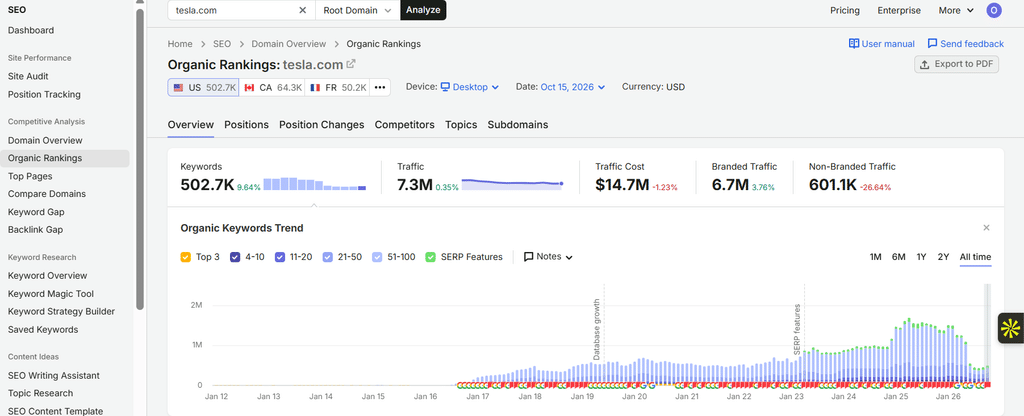
If you teach design, a competitor’s visible portfolio tutorial could give you a topic to investigate. Check whether your learners ask related questions and which formats would help them understand the answer.
Evaluate its suitability for each platform using your audience research and previous content performance.
If you need to organise related questions, Semrush’s Keyword Strategy Builder can group keywords into topics and proposed pages.
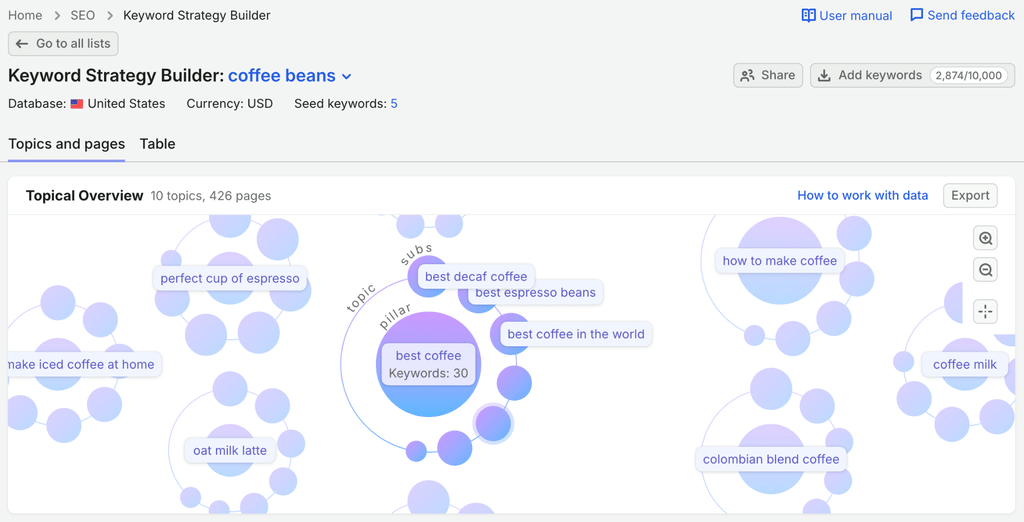
Review those suggestions against your expertise and audience needs rather than treating every proposed page as a publishing assignment.
Give Your Evidence a Useful Format
One documented student project could support:
- A website case study explaining the process.
- A video demonstrating a difficult step.
- A LinkedIn post discussing a specific lesson.
- A helpful community answer where that experience is relevant.
Each version should do something useful in its setting.
A video should demonstrate. A discussion reply should answer the question. A course page should explain the offer and its limitations.
Do not manufacture reviews, seed artificial recommendations or treat communities as places to drop links. Participation should follow platform rules and disclose relevant commercial relationships.
Consistency matters too. Your course name, instructor details, pricing and claims should not contradict each other across channels.
Our guide to entity-based SEO explains how consistent business details help people and search systems understand your identity.
Inspect What AI Answers Actually Reference
Once your core information is accurate, investigate how it appears in AI search.
In Visibility Overview, available through Semrush One’s AI Visibility Toolkit, review relevant topics and prompts.
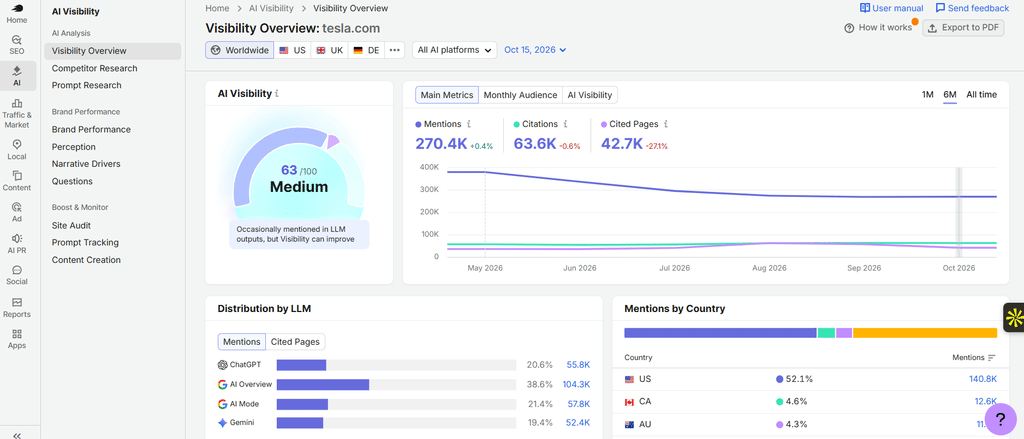
Open “View full response” to inspect the answer, named brands and linked sources. Check the displayed platform, database and update date.
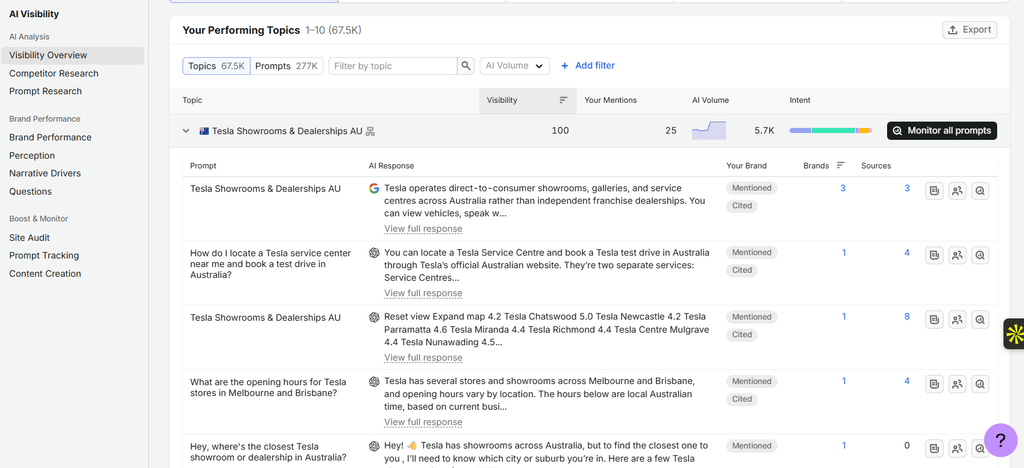
If an answer cites an independent comparison, read that exact page. Consider whether it contains an error worth correcting or represents a legitimate editorial opportunity.
A source appearing once does not prove that the entire platform deserves your budget. The report also does not show every conversation happening across social networks and communities.
You can try Semrush One free for seven days to investigate Google visibility alongside supported AI-search data. It combines the SEO Toolkit and AI Visibility Toolkit.
Measure Each Channel on Its Own Terms
Keep website visits, video engagement, community participation and AI citations separate.
Use tagged links where appropriate, review enquiries and ask customers how they discovered you. Document gaps where you cannot confidently attribute an outcome.
Our zero-click attribution guide explains how to collect additional discovery evidence and report those limitations.
Start with one audience problem, one strong source of evidence and two relevant distribution channels. Review what each channel contributes, then use those findings to decide where to invest next.
Your multi-platform search strategy should leave customers with clearer answers and give you a manageable routine for maintaining your presence.
