
Affiliate disclosure: This article contains affiliate links to Semrush. If you sign up through them, Creaitz may earn a commission at no extra cost to you.
A prospective client asks an AI assistant about your design studio.
The answer describes your services, mentions a customer review and references an interview you gave two years ago. Your current website explains the business differently.
That situation creates work beyond your own pages. Someone researching your business can encounter information from publications, directories, reviews and community discussions, each with its own version of your story.
Through digital PR, you can contribute expertise to relevant publications and communities while reviewing the information already circulating about your business.
Where Digital PR for AI Visibility Begins
Start by investigating the answers relevant to your business.
If you run a small design studio, investigate questions about your specialism, reputation and suitability for particular projects. Record the platform, question and date, then inspect the sources provided with the answer.
In Semrush’s Visibility Overview, you can open available AI responses and review their cited URLs. Use relevant findings to identify outside pages worth reading.
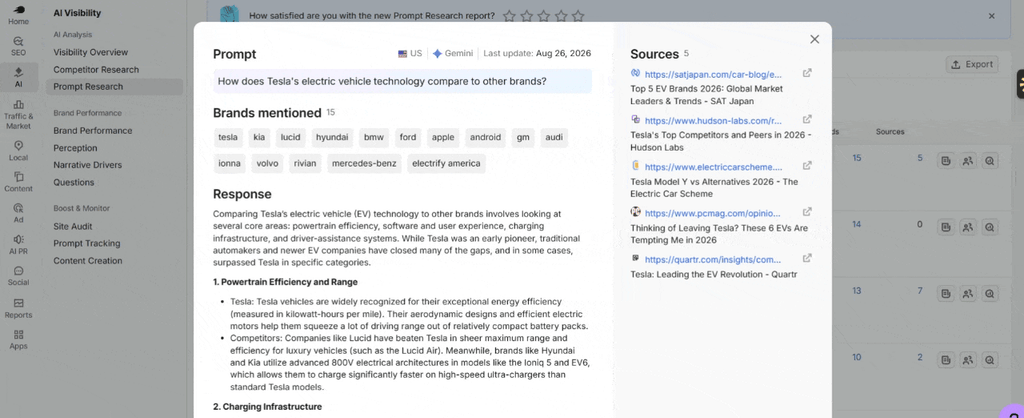
Open the exact cited page and check how it represents your business. Review the description, context and publication date.
Save a short record:
| Source | What to check |
| Industry publication | The description, publication date and supporting evidence |
| Review platform | The experience described and any response from the business |
| Professional directory | Services, location, contact details and specialism |
| Community discussion | The question, context and accuracy of the claims |
A cited page provides a useful investigation lead. An answer can draw on several inputs, and the citation alone cannot establish how every sentence was generated.
Our article on protecting your brand story in AI-generated search results explains how to review the accuracy of those descriptions.
An Old Review Needs Context
If a customer reviews your design studio after a missed deadline, that account may remain online after you improve your project-management process.
Begin with the customer’s experience. Check the facts, respond professionally and explain any relevant resolution without exposing private information.
If a directory incorrectly lists a discontinued service, request a factual correction and provide a current reference. A critical opinion calls for a different response from an objectively incorrect business detail.
Keep an internal record of the issue, the response and any operational improvement. This helps future communications remain accurate.
Request honest feedback from customers through a consistent process that follows the platform’s rules. Avoid fabricated reviews, undisclosed incentives and pressure to remove legitimate criticism.
A stronger public reputation develops through dependable work and documented follow-through.
Give Other People Something Worth Referencing
Contribute expertise that helps relevant publications and communities address their audience’s questions.
A practical contribution might include:
- An anonymised explanation of how a project scope changed.
- A documented accessibility improvement.
- A clearly explained design decision and its trade-offs.
- A small research project with a transparent method.
- A downloadable brief that helps clients prepare for a project.
Choose material you can substantiate and have permission to share.
Our guide to original content in SEO explores how first-hand experience and verifiable evidence can strengthen a contribution.
Then find the appropriate audience. A publication serving small business owners may value an explanation of website project costs. A design community may want a detailed account of an accessibility challenge.
Read the publication or discussion before approaching it. Explain the useful contribution, disclose your connection to the business and respect editorial decisions.
Make Community Participation Useful
A relevant discussion can reveal questions your own website has overlooked.
If someone asks how to prepare for a branding project, explain the information you need as a designer: business goals, audience, existing assets, decision-makers and budget expectations.
Answer the question fully. Add a link when it genuinely helps and the community permits it.
Keep commercial relationships clear. Respect community rules and avoid coordinated posting, invented customer identities or promotional replies disguised as independent recommendations.
Give each contribution a clear purpose: help the people in the discussion understand the issue and decide what to do next.
Reviewing Digital PR for AI Visibility Over Time
After correcting information or contributing expertise, revisit the relevant questions.
Semrush’s Source Opportunities report within Visibility Overview can help you investigate external sources cited in available answers where competitors appear.
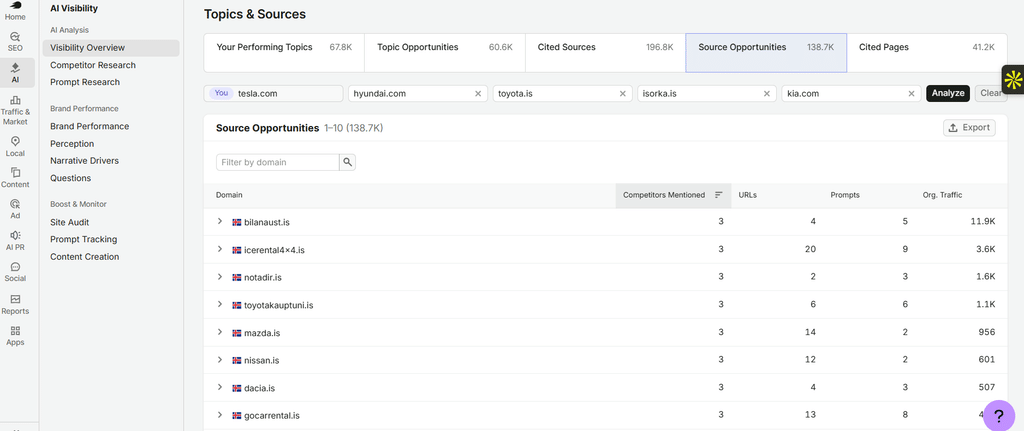
Assess each source for audience fit, accuracy and editorial standards before considering an approach.
Keep the outcomes separate in your records:
- A publication included your contribution.
- A monitored AI answer cited that page.
- The answer named your business.
- The description accurately represented your work.
Semrush’s research into citations and brand mentions illustrates why these distinctions matter: a source link can appear without the business being named in the answer.
Our article on AI citations and link building covers how to document placements and investigate subsequent appearances.
Record what you observe and the period covered. Changes after publication can also reflect other campaigns, updated sources or changes to the AI platform.
A More Durable Public Presence
Digital PR for AI visibility connects reputation, useful expertise and careful observation.
Begin with the outside information prospective customers can encounter. Address factual errors, respond constructively to feedback and contribute material that relevant communities or publications can use.
You can try Semrush One free for 7 days to investigate available AI responses and their cited sources. It helps to know which conversation you are joining before arriving with a press release.

Start with one directory entry to verify, one customer response to review and one contribution you can support with evidence. Record your actions and revisit the relevant AI answers over time.
Maintaining those habits gives you a clearer public record of your services, expertise and response to feedback. Use that record to guide your next outreach and reputation-maintenance decisions.
