

The draft took twelve minutes.
Checking its sources, correcting the examples and rewriting the introduction took the rest of the afternoon.
For a freelance writer or small marketing team, that editing time belongs in the production budget. Multiply it across a growing article library and the review backlog becomes substantial.
An AI content audit helps you examine that backlog. It brings together the published page, its supporting evidence, its performance and the work needed to maintain it.
The aim is straightforward: decide which pages deserve attention and establish a clearer standard for the next draft.
Affiliate disclosure: This article contains affiliate links to Semrush. If you sign up through them, we may earn a commission at no extra cost to you.
What the Research Can Tell You
Ahrefs’ research into AI content and Google performance found lower indexation rates among pages its detector classified as having very high AI content.
It also found heavily AI-generated pages throughout the top ten results, including position one. Its observations support further investigation into content quality; they leave the cause of an individual page’s performance unresolved.
AI-detector classifications carry uncertainty. Your publishing records, source material and editorial review provide a firmer basis for understanding how a particular article was produced.
Google’s guidance on generative AI content emphasises accuracy, quality and relevance. It also warns that generating many pages without adding value may violate its scaled-content-abuse policy.
That gives your review a useful starting point: examine what readers actually receive.
Build Your AI Content Audit Around the Draft’s History
Choose a manageable batch of articles from the same production period or publishing process.
Record:
- The URL and intended reader.
- The question the article should resolve.
- Publication and substantial revision dates.
- How AI contributed, where that information is available.
- The writer, reviewer and supporting sources.
- Search performance and relevant business outcomes.
Mark unknown production details as unknown.
For example, a community website might review a batch of tutorials about freelance platforms. The editor could investigate whether each tutorial reflects current account requirements, payment availability and country restrictions.
Those details materially affect a reader’s next step.
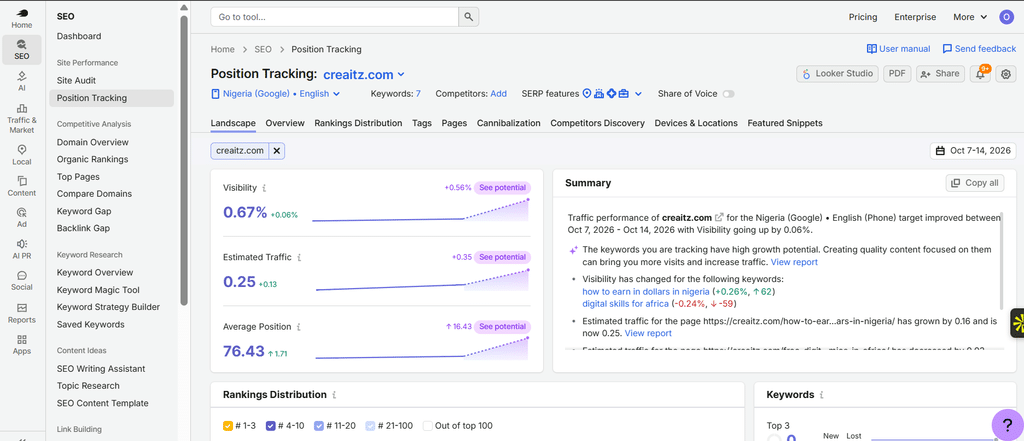
Use Search Console to review page-level impressions, clicks and available query data. In Semrush’s Position Tracking, monitor selected relevant keywords using consistent location and device settings.
Choose priority pages through their importance to readers, observed deterioration and the seriousness of any inaccuracies.
Give Each Page an Evidence Check
Read the article with its sources open.
Can you verify the prices, product features, quotations and instructions? Does a worked example contain enough detail for someone to follow it? Are the screenshots current?
A tutorial that recommends an unavailable payment method needs a substantive correction. A fabricated customer quotation requires removal and investigation.
For African digital professionals, check regional details carefully. A tool’s availability, subscription currency or withdrawal options can change the usefulness of an otherwise polished recommendation.
Our article on original content in SEO explores ways to develop examples and first-hand contributions you can substantiate.
Keep technical findings alongside the editorial review. Semrush’s Site Audit can surface issues such as broken links, duplicate content and crawlability problems.
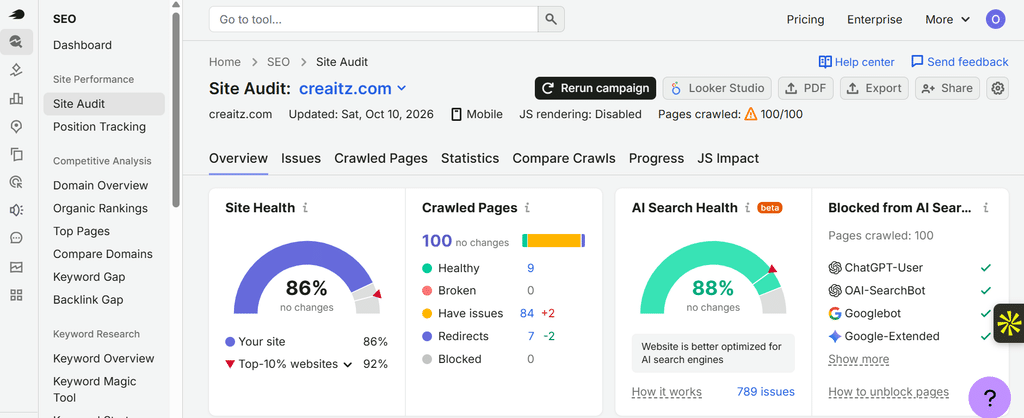
Assign the appropriate person to each finding. A developer may investigate a response error; an editor should verify a misleading explanation.
Our guide to crawled—currently not indexed covers the indexing checks that deserve separate investigation.
Budget for the Second Draft
Track research, generation, fact-checking, rewriting and approval time separately.
In MarTech’s coverage of Knak’s production research, 88% of surveyed marketers reported that AI-generated content required moderate or substantial editing. The survey covered 333 marketing decision-makers at large companies in the US, UK and Canada, so it offers context rather than a benchmark for every freelance business.
Your own records can reveal recurring costs.
Perhaps tool comparisons repeatedly need fresh testing. Perhaps every introduction needs rewriting because the brief lacks a clear audience.
Use those findings to improve the assignment before another draft enters the queue. For client work, agree on the research scope, review responsibilities and revision allowance.
Close Each Review With an Assigned Action
Give every audited page an owner and a decision:
| Finding | Action |
| Accurate, useful and current | Retain and schedule a review |
| Useful topic with outdated details | Update the affected sections |
| Important explanation lacks evidence | Research and rebuild it |
| Several pages repeat the same purpose | Assess consolidation and redirects |
| Obsolete material has no continuing purpose | Review removal after checking links and user needs |
Preserve the original version and record substantive changes.
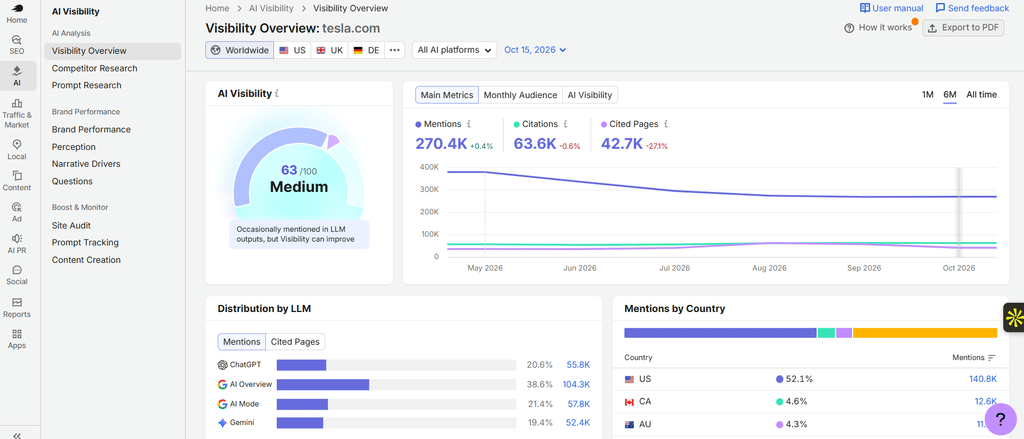
For topics relevant to AI discovery, Semrush’s Visibility Overview lets you investigate available AI responses and cited sources. Keep those observations alongside search and business results, with dates and clear labels.
Our guide to GEO vs SEO testing explains how to document changes and evaluate subsequent performance.
You can try Semrush One free for seven days to bring the technical checks, ranking observations and AI-visibility review into your audit. Give the existing library a little attention before opening another blank document.

Make Review Capacity Part of the Publishing Plan
A useful audit ends with a realistic maintenance schedule.
Start with a small batch, correct consequential errors and measure the effort involved. Use that information to set publishing commitments your team can support.
Your editorial judgement becomes valuable when you check the evidence, understand the reader and take responsibility for the finished page.
Every article you publish adds something to maintain. Plan for that work while the draft is still on the calendar.
