
Affiliate disclosure: This article contains affiliate links to Semrush. If you sign up through them, Creaitz may earn a commission at no extra cost to you.
Add an AI text file. Break every paragraph into smaller chunks. Publish more brand mentions. Install special schema.
For a freelancer or small marketing team, the growing list of generative engine optimization tasks can quickly become another unpaid job.
But which tasks actually deserve your time?
Before you spend time on a proposed GEO tactic, check which platform it targets and what evidence supports it.
Google’s AI optimisation guidance addresses common recommendations involving llms.txt, content formatting, structured data and brand mentions.
Understanding that guidance helps you prioritise technical maintenance, useful content and reliable measurement.
The advice below concerns Google Search, including AI Overviews and AI Mode. Evaluate recommendations for other AI platforms against their own documentation and observed behaviour.
GEO Myths and Truths
1. “You Need llms.txt to Appear in Google’s AI Answers”
Google says it does not use llms.txt or similar special AI files for Search.
According to Google’s guidance, Search ignores llms.txt and similar special AI files. Assess any use of these files by another service separately.
What to do instead: Check that your important pages are accessible, clearly linked and understandable.
If you manage a portfolio website, prioritise accessible service descriptions, clear navigation and accurate project information.
2. “Every Answer Must Fit Into a Tiny Content Chunk”
Use clear headings and readable sections to help people navigate your page. Give each explanation enough space to cover the relevant details.
Google says there is no requirement to break content into tiny pieces and no ideal page length for generative AI search.
What to do instead: Match the explanation to the task.
A pricing definition may need two sentences. A freelance contract walkthrough may need examples, exceptions and a longer explanation.
Preserve the examples, conditions and exceptions someone needs to use your advice safely.
3. “Special Schema Guarantees AI Citations”
Google says there is no special schema.org markup required for its generative AI search features. It still recommends appropriate structured data as part of an overall SEO strategy, including eligibility for relevant rich results.
What to do instead: Implement supported markup accurately where it applies, and keep it consistent with the information visible on your page.
In Semrush’s Site Audit, review relevant technical and indexability findings before purchasing an “AI-ready” implementation.
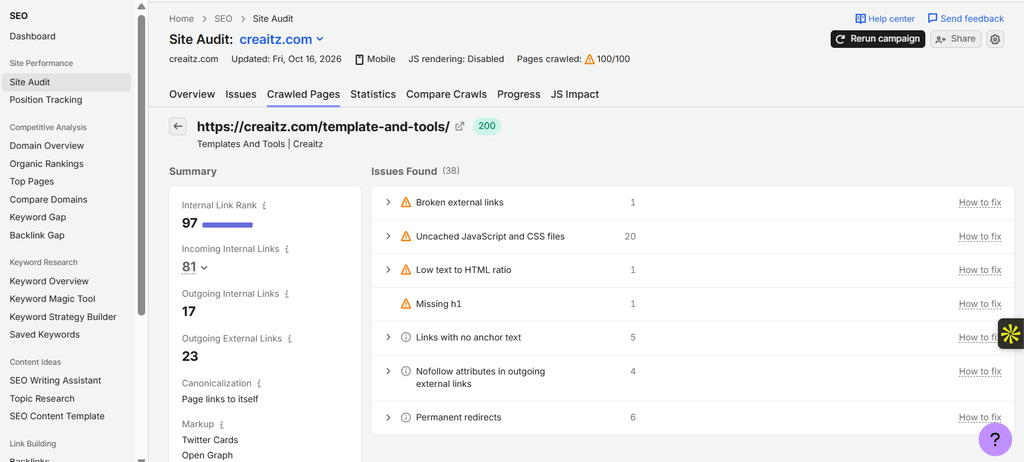
Use the findings to identify technical issues for investigation and document the corrections you make.
4. “More Brand Mentions Automatically Mean More Visibility”
Genuine reviews, relevant coverage and informed community discussions can help prospective customers evaluate your service.
Google cautions against seeking inauthentic mentions and explains that its generative AI features depend on both quality systems and spam protections.
What to do instead: Contribute something worth discussing.
If you work in design, document an accessibility improvement and explain your method. If you work in marketing, share an experiment with its evidence and limitations.
Our guide to digital PR for AI visibility explains how to investigate third-party sources and contribute useful information.
5. “You Must Rewrite Every Page Specifically for AI”
Google says its systems can understand synonyms and meaning without a page capturing every possible query variation. It also warns against creating separate pages primarily to manipulate rankings or generative AI responses.
What to do instead: Give every page a distinct purpose.
Before publishing another article, ask:
- What specific reader problem does this solve?
- Does an existing page already solve it?
- What evidence or experience can we contribute?
- Would this page still be useful without an AI citation?
Review overlapping articles together and improve the page best suited to the reader’s question. Our GEO content strategy guide explains how to choose which page deserves your next update.
Evaluate GEO Myths Before Committing Your Time
Use a simple assessment when someone proposes a GEO service:
| Ask this | Look for |
| Which platform is this advice for? | A clearly defined search or AI experience |
| What supports the claim? | Official guidance or a transparent study |
| What will change on our website? | Specific, reviewable work |
| How will success be measured? | Separate rankings, citations, visits and enquiries |
| What remains uncertain? | Clearly stated limitations and unanswered questions |
For an AI-visibility baseline, open Visibility Overview in Semrush’s AI Visibility Toolkit. Inspect an available prompt’s full response, supporting sources, platform and update date. This lets you examine observed answers rather than relying on a vendor’s broad claim.
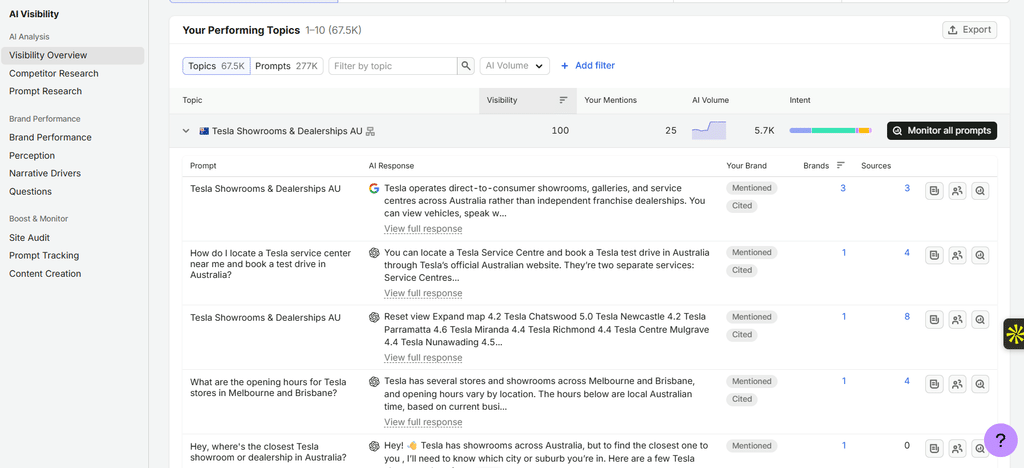
You can try Semrush One free for seven days to review AI visibility alongside your SEO performance.
Record citation changes alongside your edits and other relevant events. Our guide to GEO vs SEO testing explains how to evaluate results while accounting for competing explanations.
Spend Your Time on Work You Can Defend
Give each proposed GEO task a clear purpose, a supporting source and a way to review its outcome.
Prioritise accurate information, accessible pages and useful evidence. When you test a change, document what you altered and examine its effect across search visibility and business outcomes.
This approach gives you a stronger basis for allocating your time, explaining recommendations to clients and deciding which tactics deserve further investment.
